
We continue extended series on different royal hats that have been worn on visits to Washington, D.C. researched and written by Jake Short, longtime reader, hat aficionado (follow him on Instagram or Twitter) and dear friend of Royal Hats. Jake, it’s so great to have you back for the fifth post in this series!
Outside of politics, the National Mall, and the Smithsonian museums, Washington, DC is perhaps best known for its annual cherry blossom festival. Every spring the city comes alive to celebrate, decking itself in pink and white as the Yoshino Sakura cherry trees bloom along the Tidal Basin, at the National Arboretum, and elsewhere. While the crowds can be overwhelming and annoying, the cherry blossoms here truly are a sight to behold (even though I am a night owl, I highly recommend going for sunrise). Last year was the 110th anniversary of this gift of the cherry blossom trees from Japan. Therefore, we are now going to look back at the Japanese royal hats for this installment of the series. I have tried to follow the Japanese naming system of last name, first name as much as possible; all errors are my own, and I apologize in advance for them.
The cherry blossoms planted around the Tidal Basin were a gift from Mayor Ozaki Yukio of Tokyo in 1912. In 1910, the mayor was part of a Japanese delegation that visited DC, led by Prince Tokugawa Iesato. This trip was linked with the gifting of 2,000 cherry trees, but they unfortunately arrived diseased and had to be destroyed. Dismayed at this, a second gift of 3,020 saplings were sent in 1912; the original idea of having cherry trees originated with Eliza Ruhamah Scidmore after she had visited Japan in 1885 and had experienced the beauty of their blossoming herself. On 27 March 1912, US First Lady Helen Herron Taft and Viscountess Chinda Iwa, wife of the Japanese Ambassador to the US (seen in a floral Edwardian hat with veiling in this photo sometime around 1920), planted the first trees in a small ceremony that unfortunately seems to have no surviving photographs I could find, if any were taken at all.

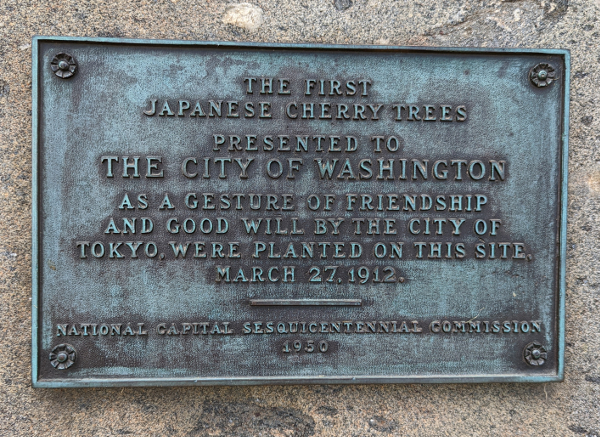
In 1965, First Lady Claudia “Lady Bird” Johnson recreated this ceremony with the Japanese ambassador’s wife by starting the planting of an additional 3,800 Yoshino cherry trees; Lady Bird Johnson wore a black Breton style hat for the event. The only royal hats I’ve found directly with the cherry blossoms have been the light colored hat with floppy eyelet brim worn by Kikuko, Princess Takamatsu and the fur felt fedora worn by Nobuhito, Prince Takamatsu (brother of Emperor Hirohito [Shōwa]), when they visited on 16 April 1931.

A brief timeline of the history of the cherry blossom relationship between Japan and Washington, DC can be found here (it features another hat on Viscountess Chinda Iwa).
Prince Tokugawa Iesato visited the US and DC multiple times, including in 1921 when he wore a (presumably) silk top hat during the Washington Naval Conference. The prince was a member of the Tokugawa clan and related to the last Shogun of Japan.
Due to the isolationism of Japan until the 19th Century then being on the opposing side in World War II, it’s not surprising Prince Tokugawa Iesato was one of the only Japanese royals to visit the US before 1945. In the second half of the 20th Century and into the beginning of the 21st Century, such visits have become more frequent. In 1965, Prince and Princess Mikasa visited the DC Chapter of the American Red Cross. Princess Yuriko can be seen in a floral covered 1960s style cloche, while her daughter Princess Yasuko (sister-in-law to Princesses Nobuko and Hisako) wore a white Breton hat.
In the fall of 1975, Emperor Hirohito (Shōwa) and Empress Nagako (Kōjun) spent 2 weeks in the US. Upon arrival in DC, they were officially greeted at the White House by President Gerald Ford and First Lady Betty Ford. The Empress wore a black and white ensemble, with a white bumper hat featuring a small knot on the front.After the official welcome on the South Lawn, the Fords hosted the Emperor and Empress for tea and conversation in the Red Room.
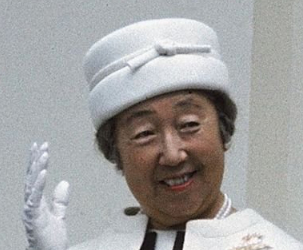
The next day, there was a visit to Arlington Cemetery and Mt. Vernon, both in neighboring Virginia. While at Mt. Vernon, the Empress wore a simple cloche hat with a small bow (similar to this hat in powder blue/perwinkle worn on a different day during their visit to the US). The Emperor also conducted marine laboratory studies at the National Museum of Natural History while in DC (sadly sans hat). Finally, an in-depth direct look at the itinerary of their visit with the Fords can be found here.
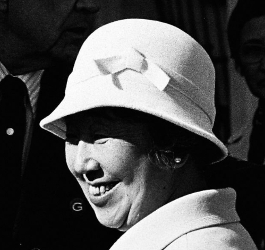
12 years later almost to the day after the visit of his parents, then-Crown Prince Akihito and Crown Princess Michiko visited DC. For their arrival at Joint Base Andrews on October 5, 1987, Crown Princess Michiko wore a black pillbox with flower. She changed for the America-Japan Society luncheon later that day to a percher cocktail hat with a stylized bow trim, presumably in the same color and fabric as her skirt suit.


The next day the Empress wore a stylized boater in white and navy blue to another luncheon at the Department of State. That same day they were seen at Arlington Cemetery; Michiko wore another boater, this time in black and white with a small floral trim.
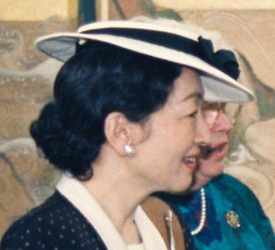

During their third day in DC, they visited Walt Whitman High School in Bethesda, Maryland (a DC suburb), to observe Japanese classes; Michiko wore a third stylized boater placed like her signature saucer hats we are familiar with.
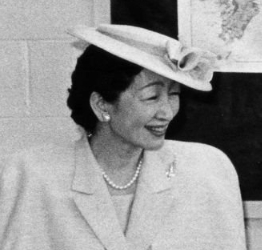
In 1994, Akihito and Michiko returned to DC, this time as Emperor and Empress. They arrived at their accommodation at Blair House, across the street from the White House, with the Empress wearing a signature wide disc hat with a bouquet of small flowers for trim.
Embed from Getty Images
Embed from Getty Images
For their welcome at the White House on 13 June, the Empress wore an ombre sunshine yellow and white ensemble that featured a small percher disc hat with a large flower. First Lady Hillary Rodham Clinton wore a rare hat for the occasion as well, a beautiful classic portrait hat in a peachy beige color that featured a bow at the back.
On 14 June Their Imperial Majesties visited the Library of Congress and an elementary school in Virginia, where the Empress wore one of her signature percher pillboxes in white with green and white floral trim.

As they left Blair House on 15 June at the end of their visit to DC, the Empress wore another small percher hat while Secretary of State Warren Christopher gave them the official goodbye.

Unfortunately, there has not been an official visit to DC by Japanese royals since 1994. I hope this will change in the near future and we’ll get a visit from Emperor Naruhito and Empress Masako, but I would also welcome a visit from my personal favorite Japanese royal: Princess Hisako (come visit our cherry blossoms!).
Post-scripts: In a royal-adjacent and DC-adjacent hat was Owada Yumiko, mother of Empress Masako, when she and Owada Hisashi greeted Akihito and Michiko in New York City during their 1994 US visit. Masako’s father was then the Japanese Ambassador to the United Nations. Yumiko is wearing a camel-colored felt hat with a large bejeweled hat pin.
For a non-royal, but hatted, cherry blossom visit, here I am enjoying peak bloom in 2021, when I debuted my custom-made fedora by Hornskov in the appropriately named color “cherry blossom”. I, of course, will wear this hat at every visit to the cherry blossoms from now on.
Embed from Getty Images
Embed from Getty Images
Thank you, Jake, for another well researched post! I didn’t know the history and Japanese connection to the Washington DC cherry trees and this was most insightful. And dare I say, your cherry hued fedora is as stunning as any royal hat! Thank you so much for this series.
Images from Jake Short; Getty as indicated; Harris & Ewing; Dirck Halstead, The Asahi Shimbun, The Ashi Shimbun, The Ashi Shimbun, The Asahi Shimbun, The Asahi Shimbun, The Asahi Shimbun, The Asahi Shimbun and The Asahi Shimbun via Getty
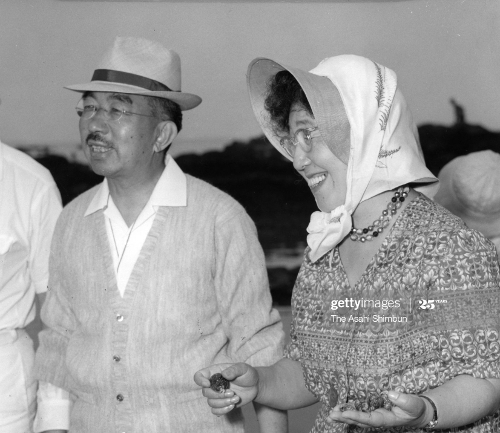
 to this undated photo of Empress Kōjun (mother of Emperor Akihito, wife of the late Emperor Hirohito) in a wonderful hat with wide, pleated brim overlaid in feathers.
 Royal Hats
