
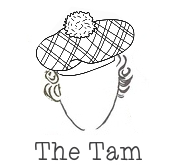
While the Queen is in residence at Balmoral this month, we’re going to look at several Scottish hats.
History: Named for the eponymous hero of the 1790 Robert Burns poem, the tam o’shanter is a flat men’s hat, traditionally made of hand-knitted wool that is stretched on a wooden disk to give it a distinctive flat shape, then felted. From the late 1500s through the 1800s, these “Scottish bonnets” were widely worn; similar to other flat bonnets common in northwestern Europe during the 170s, the tam o’shanter was distinguished by the wool pompom (known as a toorie) placed at the center of the crown. Prior introduction of synthetic dyes in the mid-19th century, these bonnets were made in only in colours possible from natural dyes, especial woad and indigo, which provided the widely used nickname of “blue bonnet” for this style of hat.
In 1915, the tam o’shanter was adopted by Scottish infantry serving on the Western Front and given the military abbreviation “ToS.” Today, regiments in Scotland, Canada and Australia continue to wear the ToS as part of their military uniform.
Based on the tam o’shanter, the tam emerged as popular women’s hat in the 1920 thanks to its compatibility with short hairstyles and the soft versatility of shape, which could be draped in different face-framing ways. A resurgence of tartan and checked patterns in the 1930s kept the style popular, albeit in a less voluminous silhouette. After this extended time en vogue, the hat style was solidified as one that would stay. It experienced another circle through popularity in the 1970s and early 1980s.
Embed from Getty Images Embed from Getty Images
Tams for women in the 1920s (left) and 1930s (right)
Characteristics: A soft, voluminous round hat, usually with a round seam that joins the flat crown to the sides (some tam crowns have triangular pie-shaped seams. Tams often have a band around the bottom that gathers in the voluminous crown and secures the hat to the head of its wearer. A traditional tam has a pompom placed on the center of the crown and is made of felted wool but today, they are made in any number of fabrics, usually without a pompom!
How a Tam and A Beret Differ: Look for crown volume and seams! If either are there, it’s likely a tam. A band around the bottom of the hat is another indication it is a tam. Tams are always made of fabric and are not blocked.
Royals Associated with this Hat Style: It’s no surprise that the royal family of the United Kingdom, which includes Scotland, are the bunch most seen in this hat style. A tam’s ease of wear makes it an accessible style for all ages.
Royal Tams:
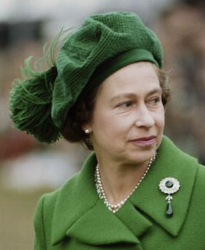
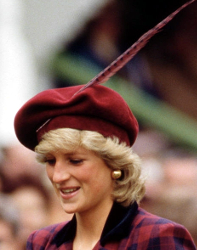
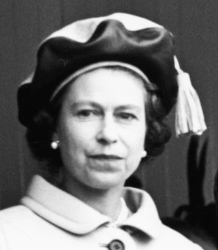

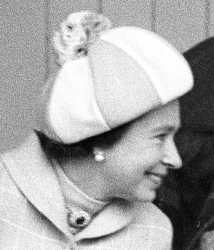
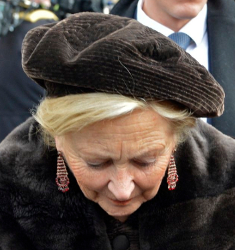
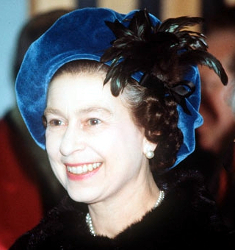
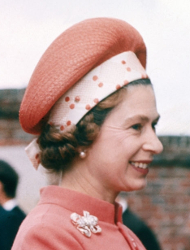

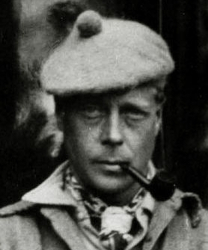
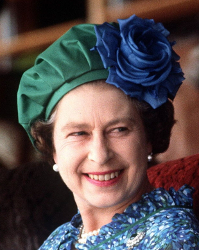
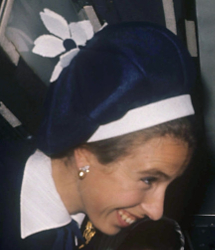
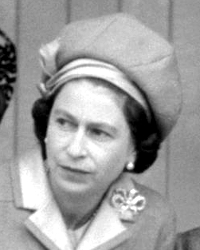
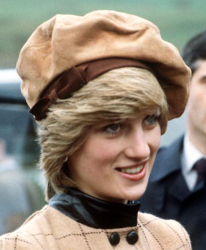
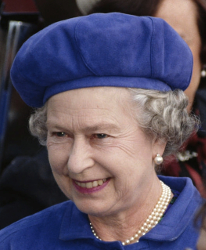
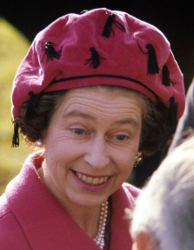
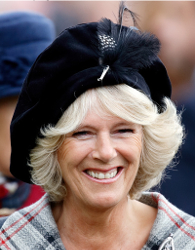
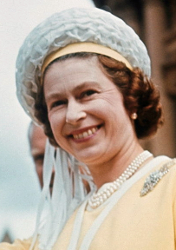
What do you think of this Scottish bonnet?!
Photos from Serge Lemoine, Terry Fincher/Princess Diana Archive, Mike McLaren/Central Press, UK Press, Anwar Hussein, Bert Van Den Broucke/Photonews, Tim Graham Photo Library, Bettmann, PA Images, Getty Images, Tim Graham Photo Library, PA Images, Ray Bellisario/Popperfoto, Jayne Fincher/Princess Diana Archive, Tim Graham Photo Library via Getty; Ron Bell/PA Archive/PA Images; Max Mumby/Indigo, Hulton Archive via Getty
 to the summer of 1962, 59 years ago, and Princess Margret on a visit to RAF Frimley in the most wonderful pale yellow straw peach basket hat trimmed in rows of daisies.
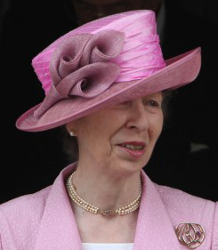 2.
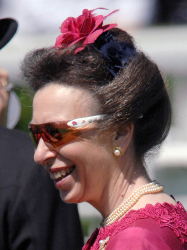
2.
 4.
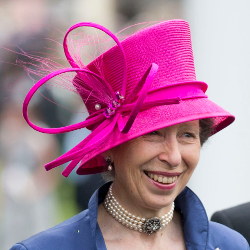
4.
 One of the hats that made a welcome reappearance this summer was a Jane Taylor designed beret percher in a rosy-beige straw trimmed with a silk roses, a trio of feathers and a raw edge gold veil. The Countess of Wessex has paired this monochrome masterpiece with two ensembles:

 Royal Hats