This Week’s Extras

The Duke and Duchess of Gloucester attended the Founder’s Day Parade at Royal Hospital Chelsea on Thursday, the Duke in military uniform and the Duchess in her repeated pale grey straw beret.
Embed from Getty Imagesa
Queen Margrethe repeated her white straw hat with upturned brim on Friday for a visit to Skibelund Krat.
The following new millinery designs caught my eye this week:
Headpiece of deep merlot silk feathers studded with crystals by Russian milliner  Anna Andrienko
Incredible texture on these feather covered hats in pink and turquoise by Australian milliner Cynthia Jones Bryson
Adorable straw flowers on this braid hat by Spanish milliner Felix de Martin
Love the couture folded pleats on this dotted silk tulle covered turban by Australian milliner Jill Humphries
Whimsical green flying bow wired headpiece by Australian milliner Enza Geddes
Powder blue high crown bowler with silver silk binding and hatband by US brand Gannon Hat Company
Ecru fedora with pompoms and black crin extended brim by Australian milliner Belinda Osborne
Unique straw hat with split brim rolled into calla lilies by Dutch milliner Marilène De Zomer
Delightful natural straw braid hat with ribbon lily-of-the-valley by German milliner Anne Schneider
Red straw beret with fan and statement feather by British milliner Louise Pocock
Light and lovely lemon silk organza ruffled peach basket percher hat by Australian milliner Lisa Hughes
Magenta straw brimmed hat with vibrant handmade silk flowers by Scottish milliner Leanne Cairns
Blush leather bandeau with wonderfully balanced, sweeping jinsin bow by British milliner Rachael Nixon
Ethereal hat with tall crown and rounded brim in woven sea grass by Dutch milliner Marianne Jongkind
Statement headpiece of flying feather birds by American brand Suzanne Couture Millinery
The most charming ivory and pale jade sisal boater hat with bow by French milliner Béatrice de Beauvoir

 

Interesting interview with Dame Frances Campbell-Preston, former lady-in-waiting to the Queen Mother

Princess Delphine designed a Lamborghini which will race in the third stage of the DTM championships in Zolder, Belgium

And finally, lovely photos from the Duke and Duchess of Cambridge for the UK’s Big Butterfly Count initiative.

Images from social media as indicated 
Tallest Feather?

It’s the discussion some of you have been waiting for-  what royal hat hosts the tallest/longest feather(s)?

One hat will immediately come to mind for many of us so I’m going to get it out of the way- Queen Máxima’s plumed beret by Fabienne Delvigne, worn October 20, 2012 to Hereditary Grand Duke Guillaume and Hereditary Grand Duchess Stéphanie’s wedding. It’s spectacular.

Embed from Getty Images

So… what other hats can you find with exceptionally tall feathers?!

Image from Getty as indicated

Ethiopian Royal Hats Part IV: Visits With Foreign Royals

I’m so pleased to welcome back longtime reader, hat aficionado (follow him on Instagram or Twitter) and friend of Royal Hats, Jake Short, for the fourth post in a 5-part series on the history and hats of the Ethiopian Imperial Family (see Part 3 here).  

Visits With Foreign Royals

State and official visits to Ethiopia and abroad were also more common during the later decades of Haile Selassie’s reign. In 1954 the Emperor, along with his youngest son Prince Sahle Selassie and granddaughter Princess Seble Desta (daughter of Princess Tenagnework), visited President Dwight D. and First Lady Mamie Eisenhower in Washington, DC (a clearer photo of this meeting can be seen here). Another visit to DC in 1963 saw the Emperor in a military cap and Princess Ruth Desta in a typical 1960s domed turban, while US First Lady Jacqueline Kennedy wore a pillbox hat (seen here in color).

Embed from Getty Images

Haile Selassie visited the Netherlands in 1954 and was photographed holding a plumed ceremonial military hat while Queen Juliana wore a calot with swooping feather trim.

Embed from Getty Images

Fifteen years later In January 1969, Queen Juliana reciprocated with a state visit to Ethiopia, accompanied by Prince Bernhard, Princess Beatrix and Prince Claus. For their arrival in Addis Abeba, Haile Selassie wore a formal bicorn hat while Juliana wore a black hat with woven halo brim studded with turquoise flowers. Princess Beatrix wore a tall, patterned turban.  

.

During this visit, these wonderful photos were captured with the Emperor in his military cap and Queen Juliana in turbans- one covered in pleated ruffles and the other, smooth.

Embed from Getty Images

During this trip, Queen Juliana was photographed at a children’s hospital in a capulet hat made of chunky, textured braid that was popular at the time. Another day, she repeated the black straw halo brimmed hat (with turquoise flowers removed!) while Princess Beatrix wore a white plaited pillbox.  On January 31, 1969, Queen Juliana wore a dark bumper hat while Princess Beatrix wore a navy brimmed hat in chunky navy straw braid with navy hatband tied in a side bow. Finally, Queen Juliana donned another turban for a visit to the Holy Trinity Ethiopian Orthodox Cathedral; Princess Beatrix paired a white and black pinstriped dress with a dark hat with wide, upturned brim

Embed from Getty Images

King Paul and Queen Frederika of Greece visited Addis Ababa in 1959. Here they are seen with the Emperor and Empress, all wearing hats suited to their rank and typical for that time.

Embed from Getty Images

A decade later in 1969, the Emperor met Pope Paul VI, who wore a white zucchetto skullcap.

Embed from Getty Images

Again in his military cap, Haile Selassie is seen with other royals at a ceremony in Iran in 1971 to celebrate 2,500 years of the Persian Empire; Queen Fabiola and King Baudouin of Belgium (with Princess Anne of the UK behind them), Queen Ingrid and King Frederik of Denmark, Queen Anne-Marie of Greece (behind Emperor Haile Selassie), and Shah Reza Pahlavi and Shahbanou Farah Diba of Iran can be seen wearing hats (many more royals were also in attendance at this grand event).

Embed from Getty Images

Relations with the Japanese Imperial Family, another reigning imperial family, were cordial and saw multiple visits. Haile Selassie visited Japan in 1956 with his eldest daughter Princess Tenagnework (seated, wearing a veiled calot), her daughter Princess Aida Desta (wearing a feathered casque hat), and Prince Makonnen, Duke of Harar. Crown Prince Asfaw Wossen and Crown Princess Medferiashwork visited Japan in 1959; while neither wore hats during a duck hunting session, their hosts Crown Prince Akihito and Crown Princess Michiko did. Crown Princess Medferiashwork was seen during this same visit in a toque-like hat during a visit to a department store.

Crown Prince Akihito and Crown Princess Michiko visited Ethiopia in 1960, with Akihito (carrying a top hat) being formally received by Emperor Haile Selassie at the airport. Crown Princess Medferiashwork wore a calot while she and Michiko visited a girls’ school; Medferiashwork was later seen in a headscarf when she accompanied Michiko and Akihito (both in hats) on a visit to Mt. Entoto just north of Addis Ababa.

Finally, there were multiple interactions with the British Royal Family. A 1954 state visit to the UK by the Emperor and his son the Duke of Harar began at Victoria Station, where Queen Elizabeth II greeted Haile Selassie, who wore a ceremonial military hat trimmed with lion’s mane!

The Queen Mother, Princess Margaret, Princess Mary, and Princess Alice, the Duchess of Gloucester, who all wore calots typical of the mid-1950s.

Embed from Getty Images

The Queen wore a petaled/feathered calot as she, the Emperor, and the Duke of Edinburgh traveled to Buckingham Palace.

Embed from Getty Images

A 1965 visit to Ethiopia by the Queen and Prince Philip saw only military hats from the host royals (the Empress had died in 1962, and there is a lack of photos of other female royals to determine their level of participation in the visit). 

Embed from Getty Images

Queen Elizabeth, as you’d expect, wore several hats during this visit.

Embed from Getty Images

While the visit saw no royal hats otherwise, there were many instances of tribal hats and headpieces worn by those who came to meet the royal guests.

Embed from Getty Images

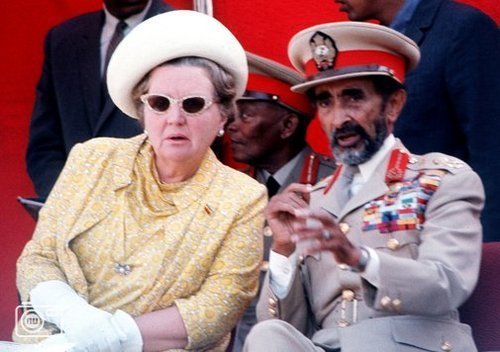
Another informative post, Jake- thank you! The Ethiopian princesses’ calots and half hats during the Japanese visit (and reciprocal visit five years later) are beautiful examples of fashion of the time! It’s also a fascinating reminder how millinery styles changed (inflated!) from the 1950s to the 1960s! How well did Queen Juliana’s cream turban pair with her 1960s sunglasses?! Such a fun look!

Jake returns next week for the final post in this series. 

Images from Getty and BNA Photographic

Duchess of Cornwall’s Pink Hats

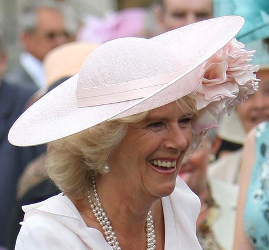
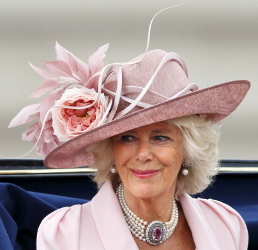
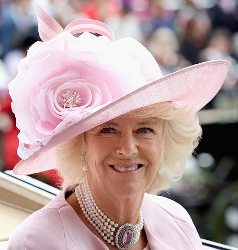
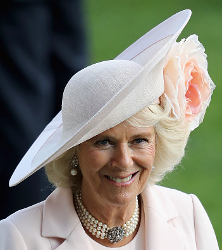
The Duchess of Cornwall celebrated her birthday on July 17, an occasion we belatedly celebrate with another inventory of her hats. This time we’re looking at all of the pink designs in her wardrobe, shown below in order of debut:

1.  2.
Designer: Both Philip Treacy
Introduced: July 22, 2008; June 17, 2009

3.  4.
Designer: Both Philip Treacy
Introduced: June 14, 2016; June 17, 2016

5.  6.
Designer: Both Philip Treacy
Introduced: May 19, 2018; June 18, 2019

It’s a lot of barely-there blush! Camilla clearly prefers pastel hues, especially for her summer wardrobe, and she wears pink well. There are a few surprises here- I don’t recall seeing hat #1 before and it’s lovely! The other surprise for me was aside from the feather pinwheel of #5, these hats are one of two shapes- either the chunky crown/gentle sidesweep of #2 and #3 or the sharp slice sidesweep of #1, #4 and #6. They are wonderfully dramatic shapes that suit Camilla but I’d like to see a little more variation.

What do you notice about these blush beauties? Which hats stand out here most to you?

Images from Getty as indicated; POOL/ Tim Graham Picture Library, Max Mumby/Indigo, Chris Jackson, Chris Jackson, Gareth Fuller/AFP and Mark Cuthbert/UK Press all via Getty

Hats From the Past

Royal Hats to July 31, 1917 and Prince and Princess Alexis of Serbia photographed in hats while on a visit to Stratford upon Avon. The Prince was a claimant to the Serbian throne through the Karageorgevitch family line while the princess was Myra Abigail “Abbie” Pratt, an American golfer who won a bronze medal in the 1900 Summer Olympics.

Embed from Getty Images

Images from Getty as indicated