On Wednesday, October 23, Swazi King Mswati III and his newest wife, Inkhosikati LaMashwama arrived in Sochi to take part in the 2019 Russia-Africa Summit. Inkhosikati LaMashwama wore a magenta straw disc percher hat trimmed with straw twists, rosettes, feathers and sparkle crin bows
Empress Naruhito and Empress Masako with Princesses Yoko, Akiko, Nobuko, Hisako and Tsuguko at the Shunju-no-Ma hall for the 3rd court banquet on October 29th. 🍷🥂🥃🍷🥂🥃🍷🥂🥃 📸 https://t.co/VGUhgzJB2Xpic.twitter.com/5UugbzqXTc
And from British milliner, millinery instructor and millinery flower maker Ann Tomlin, this whimsically wonderful green button percher trimmed with a handmade wildflower garden. It’s just so charming.

Lovely new portraits of the Belgian royal family (see here, here and here) released last weekend for the celebration of Princess Elisabeth’s 18th birthday
The Norwegian and Greek royals shared inspiration for their Halloween costumes this year
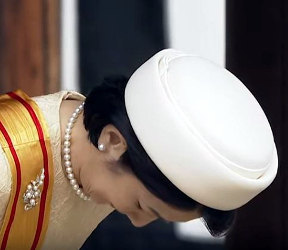
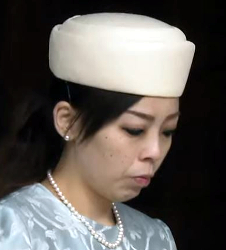
We finally wrap up our look at last week’s Imperial Enthronement with attention to the hats worn by members (and former members) of the Imperial royal family. Two familiar faces at Tuesday’s enthronement ceremony included Noriko Senge (former Princess Noriko of Takamado) and Sayako Kuroda (Emperor Naruhito’s younger sister, the former Princess Nori). While Noriko paired her gown with a delicate tiara borrowed from her mother (Princess Hisako usually wears it as a necklace), Sayako wore a calot hat covered in grey silk with what looks like hand folded pleats around the outside edge of the hat.
Ayako Moriya (former Princess Ayako of Takamado) , who is expecting a baby, and her husband Kei were also in attendance, Ayako in a tiara from her mother’s jewellery collection, usually worn as a necklace. Also in tiaras were former Mikasa princesses, Masako Sen and Yasuko Konoe as well as the emperor’s paternal aunt, Takako Shimazu (Emperor Emeritus Akihito’s sister).
Imperial relatives leaving the enthronement ceremony on October 22, 2019
While not royal, it feels important to include retired diplomat Hisashi and Owada and his wife Yumiko- Masako’s parents, who, it is understood, have been an unwavering source of support to her over the past two decades. Yumiko wore a silk covered bumper percher hat in the same muted lilac shade as her gown. The hat was placed at a perfect angle and shows how a hat of this shape and scale can look wonderful on any aged wearer.
Japanese emperor's enthronement ceremony
Former Japanese diplomat Hisashi Owada and his wife Yumiko — parents of Empress Masako — arrive at the Imperial Palace in Tokyo on Oct. 22, 2019, to attend Emperor Naruhito's enthronement ceremony. (Photo by Kyodo News via Getty Images) pic.twitter.com/J0Sj0G3BhY
Last Wednesday, on the day following the enthronement, Imperial family members attended a court banquet. While the empress, as hostess, did not wear a hat, Crown Princess Kiko wore a tan silk covered bumper design. Her daughters opted for more new bandeau headpieces making more vibrant statements, Princess Mako in pale pink trimmed with pink gerbera daisies and Princess Kako in deep scarlet with delicate flowers and leaves.
Princess Nobuko topped her deep raisin purple velvet gown with a silk covered bumper hat in the same hue with split bumper brim embroidered with beads. Princess Akiko repeated a lemon yellow hat with white silk organza wrapped bumper brim, trimmed with a spray of silk flowers at the back. Princess Yoko repeated a salmon pink pillbox hat trimmed in wispy feathers that give it distinct texture.
Princess Hisako wore a boater hat variation in what looks like cream and peach crin. The hat’s shallow peach crown is accentuated with a with cream hatband and its focal point, a gently fluted brim, in transparent overlapping layers of the two shades. The left side of the hat is trimmed with leaf cutouts and applique lace studded with pearls. Princess Tsuguko repeated her blue and green silk jacquard percher hat with layered sash and trailing spray of blossoms on the side- a spray that has received a trim since its first outing.
Looks like Princess Tsuguko reduced the flowers on her hat, previously worn on May 4th for the general public greetings after Emperor Naruhito's accession.
Former Takamado princesses Noriko Senge and Ayako Moriya were also spotted at the banquet in a pair of bumper hats, Noriko in a veiled white design with ostrich feather trim and Ayako in forest green with a dark spray of feathers on the side.
Empress Masko’s parents, Hisashi and Yumiko Owada, attended again, Yumiko in a small, angular pillbox in the same pale avocado shade as her ensemble.
The 2nd court banquet was held on October 25th. Guests included members of government, former Imperial family, Japan Academy, Nobel laureates, and representatives from various fields. Empress Masako's parents Hisashi and Yumiko Owada also attended. 📸 Jiji, Sankei pic.twitter.com/ximKc1PsyD
Excellent footage of this court banquet can be seen below. This post concludes our look at hats worn to the Japanese enthronement, dearest readers. Which designs here stand out most to you?
The main element in Tuesday’s Imperial Enthronement was the Sokuirei-Seiden-no-Gi, an official proclamation ceremony where the new emperor announces to domestic and foreign audiences that he has ascended the Chrysanthemum Throne.
This ceremony took place inside the Imperial Palace before a large audience. Emperor Naruhito again appeared in sokutai robes, this time in the dark rust-brown colour reserved for his role, and the distinctive black kanmuri hat.
Empress Masako wore a traditional “junihitoe” multi-layered kimono which dates back to the Heian Era (794 to 1185). In white, silver, red, coral, purple, pale peach and green, the kimono is regal and dramatic, especially paired with the the elaborate sculpted sweeping ponytail that is worn with this costume along with a triple pronged golden headpiece.
The Imperial princesses also wore the traditional junihitoe with Crown Princess Kiko in shades of red, pink, orange, gold, white and purple, with a top robe in slate navy and the others in layers of green, navy, red, burgundy, yellow and white with a top robe in royal purple. Each wore the traditional spiky gold headpieces atop the costume’s dramatic hairstyle.
On Tuesday, the Enthronement of Emperor Naruhito took place with a series of ceremonies at the Imperial Palace in Tokyo. Empress Masako was spotted arriving at the palace early in the morning in a sleek, unembellished bumper hat covered in a warm shade of ivory silk.
The day began with the ‘Sokuirei-Tojitsu-Kashikodokoro-Omae-no-Gi’ ceremony held at the Kashikodokoro Shrine within the Imperial Sanctuaries where Emperor Naruhito ceremonially announced the enthronement ceremony, which would shortly follow. For this event, the emperor wore traditional sokutai robes in white linen specifically cultivated for this event and a tall, black kanmuri hat.
Empress Masako wore a white and peach jūnihitoe, a formal ancient kimono, with multiple (at least 12) complex layers. The traditional costume includes a specific and rather distinctive hairstyle and triple pronged silver headpiece, worn just over the forehead.
This ceremony was attended by Japanese Prime Minister Shinzo Abe, select government officials and members of the Imperial royal family. The imperial princesses followed a traditional court dress code of gowns with ivory hats.
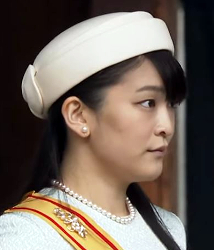
Princess Kiko, Princess Mako, and Princess Kako all chose bumper designs with slightly different brim shapes and trimming.
While Princess Yoko was also in a cream silk bumper hat, her sister, Princess Akiko made a slightly different statement in a pillbox with textured vertical pinstripes, trimmed with a slim band around the middle of the hat that tried in a bow at the back.
The most interesting hats were, again, worn by the Takamado princesses. Princess Hisako’s bumper variation featured less structured sides that draped into some lovely movement. Princess Tsuguko was the only one to wear a brimmed design, trimmed with a slim bow at the front.
While I understand that a string of ivory hats might not seem exciting to western fashion sensibilities, I think there’s something serenely compelling and regal about it.
On Thursday, Queen Beatrix opened the opening of the 79th session of the Institut de Droit international (IDI) in the Hague. She topped her black floral dress with a black straw hat with tall, pleated Breton style brim.
Princess Ingrid’s confirmation took place yesterday in the Chapel of the Royal Palace in Oslo. For this milestone, she, Crown Princess Mette Marit, Queen Sonja and Princess Märtha Louise, all wore traditional Norwegian bunads with the folk costume’s wreath-style rolled headpiece .
Ingrid’s new bunad was a gift from her grandparents, King Harald and Queen Sonja. In a wonderfully personal touch, Queen Sonja, who was a trained dressmaker before beginning her royal life, helped create the traditional folk dress.
Ingrid’s godmother, Crown Princess Victoria, attended the event in a lilac silk chiffon dress with matching headpiece. of lilac silk ribbon pleated flowers with hand beaded centers from Parant Parant Couture Headpieces by Örjan Jackobsson. Crown Princess Mary, who attended with Crown Prince Frederik and Prince Christian, wore a new folded headpiece in plum straw that wrapped around her head with a side rosette.
Also today, Queen Elizabeth was joined by Princess Anne and Vice Admiral Timothy Laurence for Sunday service at Crathie Kirk in Scotland. The Queen repeated a raspberry Rachel Trevor Morgan hat with sidesweeping short brim and felt feather trim. Princess Anne wore a new brown felt trilby with extended brim and what looks like a spray of feathers on the side by Amy Morris-Adams, different from the very similar brown trilby with side bow she wore for the first time LAST Sunday.
Pierre Casiraghi was part of the sailing team for Greta Thunberg’s landmark voyage and navigated some rather rough seas.
Empress Masako and the Imperial princesses donned traditional kimonos on Friday for a palace tea party hosted for African leaders.
We end this week with an August 27 performance”The Swan” by Saint-Saëns by Empress Emerita Michiko and flutist Karl-Heinz Schütz (jump to 0:30 to start)