 to January 18, 1960 and a visibly expectant Queen Elizabeth (Prince Andrew would arrive a month later) returning from Christmas break at Sandringham in a chic brimless hat.
Image from Getty as indicated

to January 18, 1960 and a visibly expectant Queen Elizabeth (Prince Andrew would arrive a month later) returning from Christmas break at Sandringham in a chic brimless hat.
Image from Getty as indicated
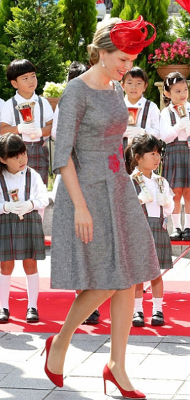
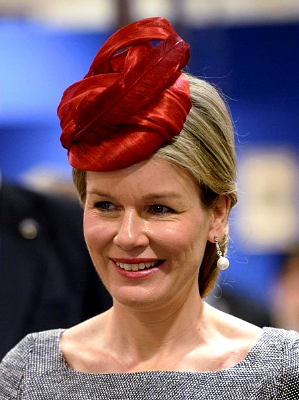
 Queen Mathilde will celebrate her 48th birthday on Wednesday and to mark this even, we’re taking a closer look at one of her hats. Designed by Fabienne Delvigne, her red beret percher wrapped in silk abaca with curved feather trim has been worn twice so far, each time with a different frock:
Look #1: with a grey textured woven dress embroidered with red roses by Esmeralda Ammoun worn for an October 2016 visit to Japan
Look #2: With a blush silk embroidered floral Natan belted dress worn June 27, 2018 for an Australian state visit
Embed from Getty Images Embed from Getty Images Embed from Getty Images
I’m torn between these two looks. Which dress do you think pairs best with this hat?
Images from Photonews and The Asahi Shimbun, via Getty; Social media and Getty as indicated

Adore the graphic and colourful hatband on this lemon-lime felt split-crown fedora by US milliner Kristin Silverman
Wonderful hand painted flowers on this pink leather bandeau by Australian milliner Milano Imai
Ivory straw hugger wit black dotted veil studded with feathers by Irish milliner Marie Galvin
Lovely shapes on this blue cloche with leather bands and this felt floral-trimmed bandeau by Italian brand Nadine Millinery
Statement leopard print fedora with asymmetrical brim by British milliner Carrie Jenkinson
Channeling spring with this floral embroidered bandeau from UK brand Emily London
Fantastic texture on this handwoven (not knitted!) wool beret by American milliner Jennifer Hoertz
The prettiest picture hat in layered grey and aqua straw with stacked hatband and lilies by British milliner Kerry Kernan
For our dear gents, a handsome olive Pork Pie hat with lighter green hatband & wind cord by Hornskov København
Dimensional laser printed flowers on the brim of this electric blue Garbo hat by Italian brand Borsalino
Black bound ivory felt cloche with flyaway cutout brim and back twist by Romanian brand Decorina
Deep red velvet bandeau with statement side silk flower and veil by Rachel Trevor Morgan
Ivory felt embroidered fedora with yellow and peacock blue layered hatbands by American milliner Cassie MacGregor
Absolutely wonderful ribbon pleating on these colourful berets by Dutch milliner Wies Mauduit
Palest slate blue wool beret with lace applique, embroidery and dimensional silk flowers by French brand Katoushti
Black and tan woven boater with pearl brooch studded hatband and statement bow by British milliner Felicity Gee
Firey tropical floral trim on this ivory straw saucer hat by French milliner Céline Tastevin
Gold lattice embroidered halo bandeau headpiece trimmed in pearls by British brand Stephanie Elizabeth Millinery
Adore the curving seams on this red wool cloche with leather panels by British milliner Karen Henriksen
Sleek petrol blue felt fedora with side knot and saucy angled brim by American milliner Laura Del Villaggio
From British milliner Yuan Li, an uplifting message in ombre-dyed rainbow straw

Images from social media as indicated

Characteristics: a beret is a soft, round hat with a flat crown which is worn tilted to one side of the head. Usually made from from wool, felt, knitted/crocheted cotton, leather or acrylic, the base of a beret snuggly hugs the wearer’s head. While a traditional beret is round, soft and flexible, we also see rigid versions blocked in felt or straw. These blocked versions often follow more oval, teardrop, or triangular shapes which give them that characteristic “tilted to one side” beret look. Berets are made from a single piece of material, without seams across or around the hat, which give them a smooth appearance.
History: Hats similar to the beret have been found in Bronze Age (3200-600 B.C.) tombs and on paintings and sculptures across Western Europe from 400 B.C. through the 13th century, a longevity sustained over the centuries by the availability and cheap cost of wool and the simple style of the hat. By the by the 14th and 15th century, wool berets were commonly worn by the lower classes of society, particularly farmers and artists. Rembrandt was known to often wear a beret hat, which features in most of his self portraits.
The French word “beret” was first documented in 1835 referring to a flat, woolen cap worn by Basque peasants. During the Second Carlist War in Spain (1846-1849), the beret was first politicised when Carlist leader Tomas Zumalacarregui took to wearing one in red. In France, the hat’s military association grew when elite members of the French Army began a long-held tradition of wearing a blue beret. In the 1950s, the U.S. Army’s Special Forces adopted green berets, for which the group is now referred. Today, we see berets the military uniforms of numerous nations.
Embed from Getty Images Embed from Getty Images Embed from Getty Images Embed from Getty Images Embed from Getty Images Embed from Getty Images Embed from Getty Images Embed from Getty Images Embed from Getty Images Embed from Getty Images
The beret first became fashionable during the roaring 1920s, becoming the epitome of Parisienne bohemian chic; by 1928, factories in France, Spain and Italy were manufacturing millions. New wave French film brought a revival in the 1960s, a revival that took a revolutionary turn, first on the heads of Cuban leaders Che Guevara and Fidel Castro, then through the 1970s on on members of the Black Panthers, Brown Berets Young Lords Party and Guardian Angels.
The beret came back into fashion popularity in the 1990s free of its former statements of social class, art, political ideology, black pride, revolution or vigilante organization. The past decade, embellished beret percher designs have dominated millinery fashion, topping heads at racing and royal events around the world.
Royals Associated with this Hat Style: No surprise, this long-standing hat style is among the most widely worn across all royal households. Click on the photos below to link back to feature posts and original photo sources for each hat.
Traditional Soft Berets:
Embed from Getty Images Embed from Getty Images Embed from Getty Images Embed from Getty Images
Embed from Getty Images 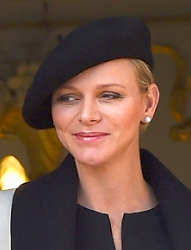
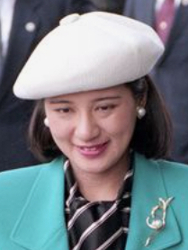

Hats by Stephen Jones, unknown,unknown, Jane Taylor, unknown, Dior, unknown, unknown
Blocked Berets:
Embed from Getty Images Embed from Getty Images Embed from Getty Images Embed from Getty Images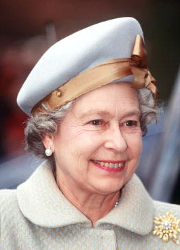
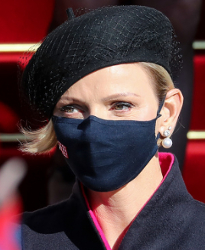
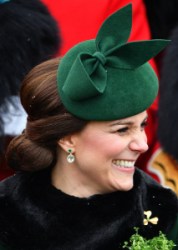


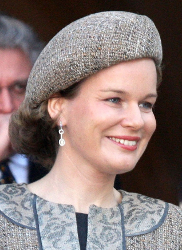
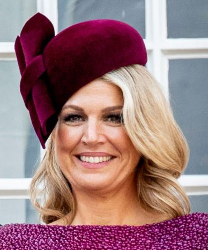
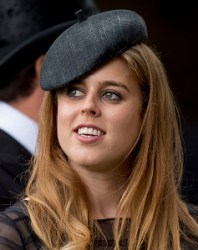
Hats by Stephen Jones, unknown, Stephen Jones, Whiteley, Frederick Fox, Dior, Gina Foster,
Philip Treacy, unknown, Fabienne Delvigne, Philip Treacy and Emily London
Embellished Beret Perchers:




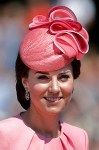


Hats by by Philip Treacy, Philip Treacy, Philip Treacy, Juliette Botterill, Jane Taylor, unknown, Philip Treacy






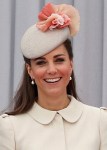
Hats by Rosie Olivia, Whitely, Amy Morris-Adams, Philip Treacy, Rosie Olivia, Philip Treacy, Jane Taylor





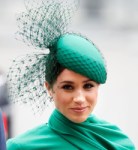

Hats by Philip Treacy, Rachel Black, Juliette Botterill, Susanne Juul, Eudia, William Chambers and Juliette Botterill
What do you think of the once lowly beret hat? What is your favourite beret hat to don a royal head?
Images from Getty as indicated and:
Soft berets images from: Pascal Le Segretain, The Asahi Shimbun and Chris Jackson via Getty Images
Blocked berets images from: Tim Graham Photo Library, Valery Hache/AFP, Pool/Max Mumby, Patrick van Katwijk, Rune Hellestad – Corbis/Corbis, Photonews, Samir Hussein/WireImage and Mark Cuthbert via Getty Images
Embellished beret perchers images: Freek van den Bergh/Pool, Chris Jackson, Mark Cuthbert, Andrew Matthews/PA Images, Max Mumby/Indigo, Ragnar Singsaas, Max Mumby/Indigo, Max Mumby/Indigo via Getty Images; Corbis; Gareth Fuller/WPA Pool, Chris Jackson, Chris Jackson, Samir Hussein/Wire Image, Chris Jackson, Max Mumby/Indigo, Julian Parker, Samir Hussein, Julian Parker/UK Press, Patrick van Katwijk/Wire Image, Max Mumby/Indigo, and Andrew Matthews/PA Images
to early 1967 and this lovely photo, shared this week by Pieter Van Vollenhoven to celebrate his and Princess Margriet’s 54th wedding anniversary. Taken in the days before their January 19, 1967 wedding, this shot captures a most memorable floral pillbox on the Dutch princess.
Photo from Getty as indicated
 Royal Hats